Short videos
Bot Farm for Large-Scale Content Distribution
Automate multi-account management and content distribution across platforms from one central control hub.
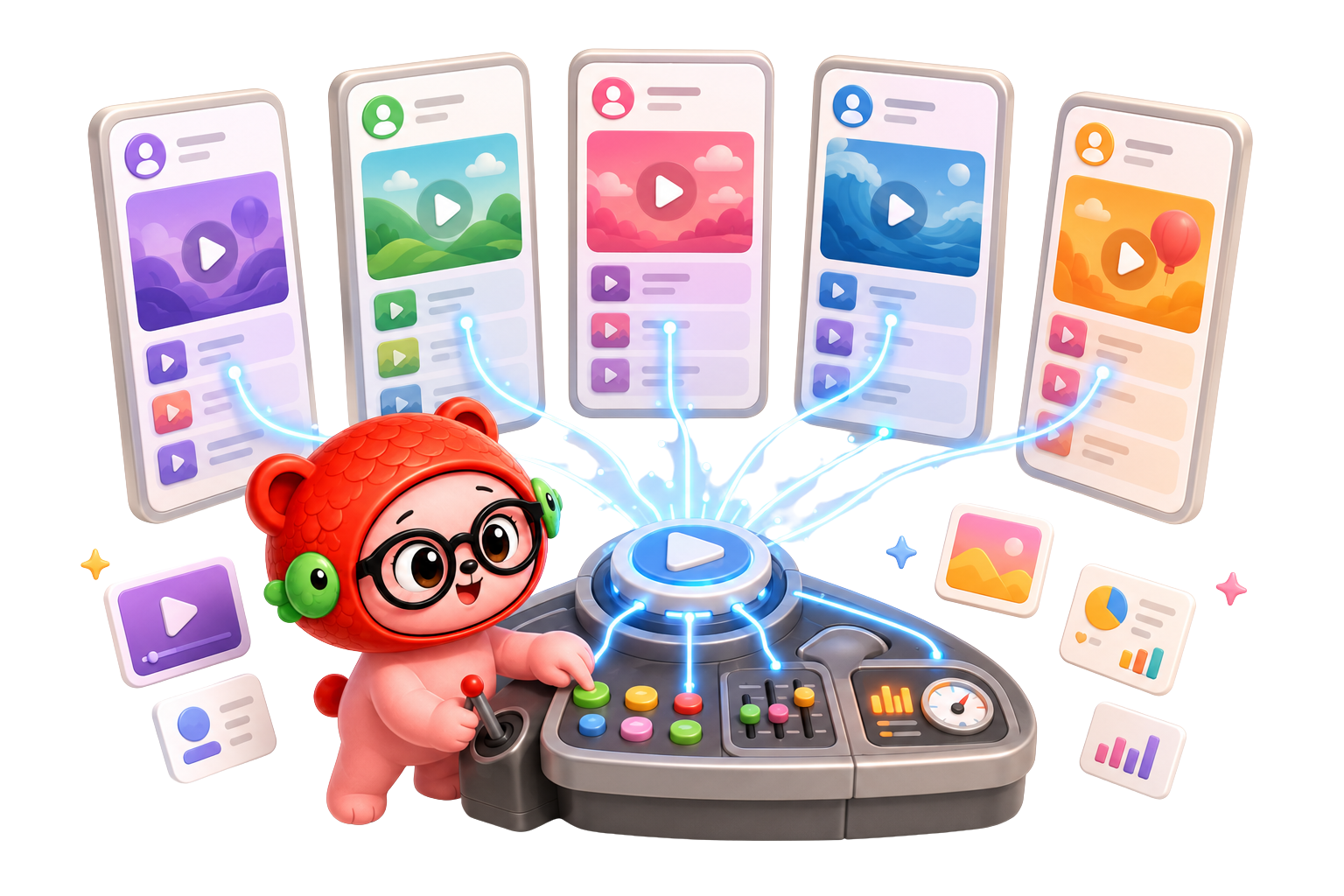
One content source. Dozens of distribution points.
Bot Farm is a managed network of accounts connected by a shared content and traffic strategy. The accounts regularly publish different versions of short videos, excerpts from long-form materials, themed selections, expert clips, highlights, reactions, and test creatives. Each account can have its own theme, style, visual identity, and publishing frequency. The goal is to create more audience touchpoints with content and guide interested users to one destination: a main channel, website, app, or another project hub.
Account network
Multiple managed profiles work within one shared strategy.
Content flow
Materials are regularly created, adapted, and distributed across accounts.
Central hub
All distribution points direct audience attention to the project’s main resource.
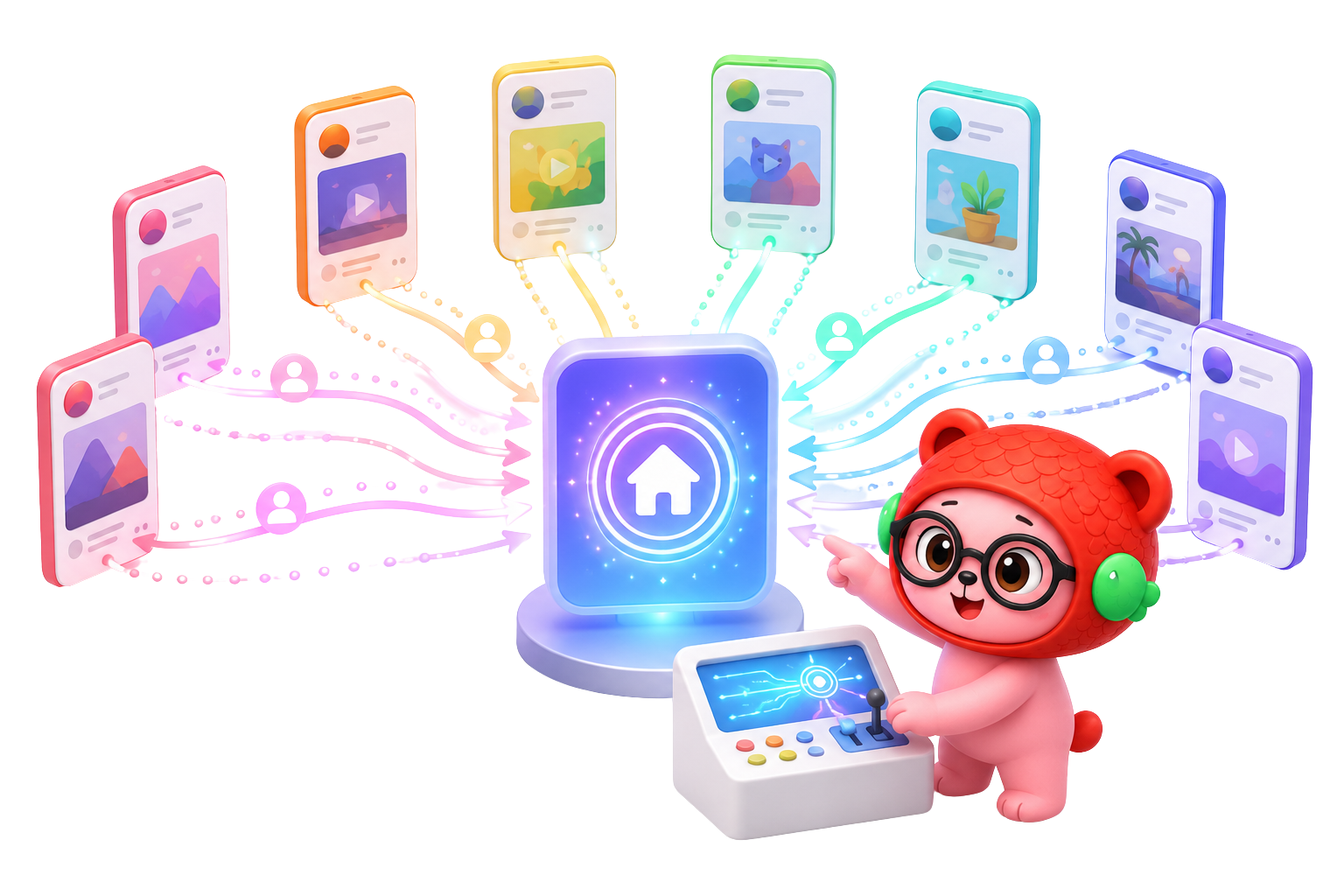
The account network works toward one central hub
Bot Farm creates many entry points where audiences discover content and move to the project’s main resource.
The hub can be:
- the brand’s main account
- a Telegram channel
- a website or landing page
- an app
- a marketplace
- a community
- a lead form
- a product page
- a media project
Bot Farm does not replace the brand’s main channel. It creates additional paths that bring audiences to it.
How Bot Farm Works
The workflow combines network design, content production, publication distribution, and analysis of what works.
01
Define the goal
Define the product, audience, platforms, desired action, and central hub.
02
Design the network
Define the number of accounts, their themes, roles, visual identity, and content workflows.
03
Create the content flow
Use filming, editing, archival materials, templates, AI, and hands-on team work.
04
Adapt materials
Adjust opening seconds, editing, captions, covers, descriptions, length, and CTAs.
05
Distribute publications
Content goes out across different accounts and platforms on schedule.
06
Collect data
Compare topics, formats, opening frames, retention, reactions, and target conversions.
07
Scale what works
Strengthen the best-performing formats and replace weak hypotheses.
Content for a large number of accounts
The system can work with existing materials, new production, and serial formats that are regularly scaled through the account network.
Highlights
Serial content
Test creatives
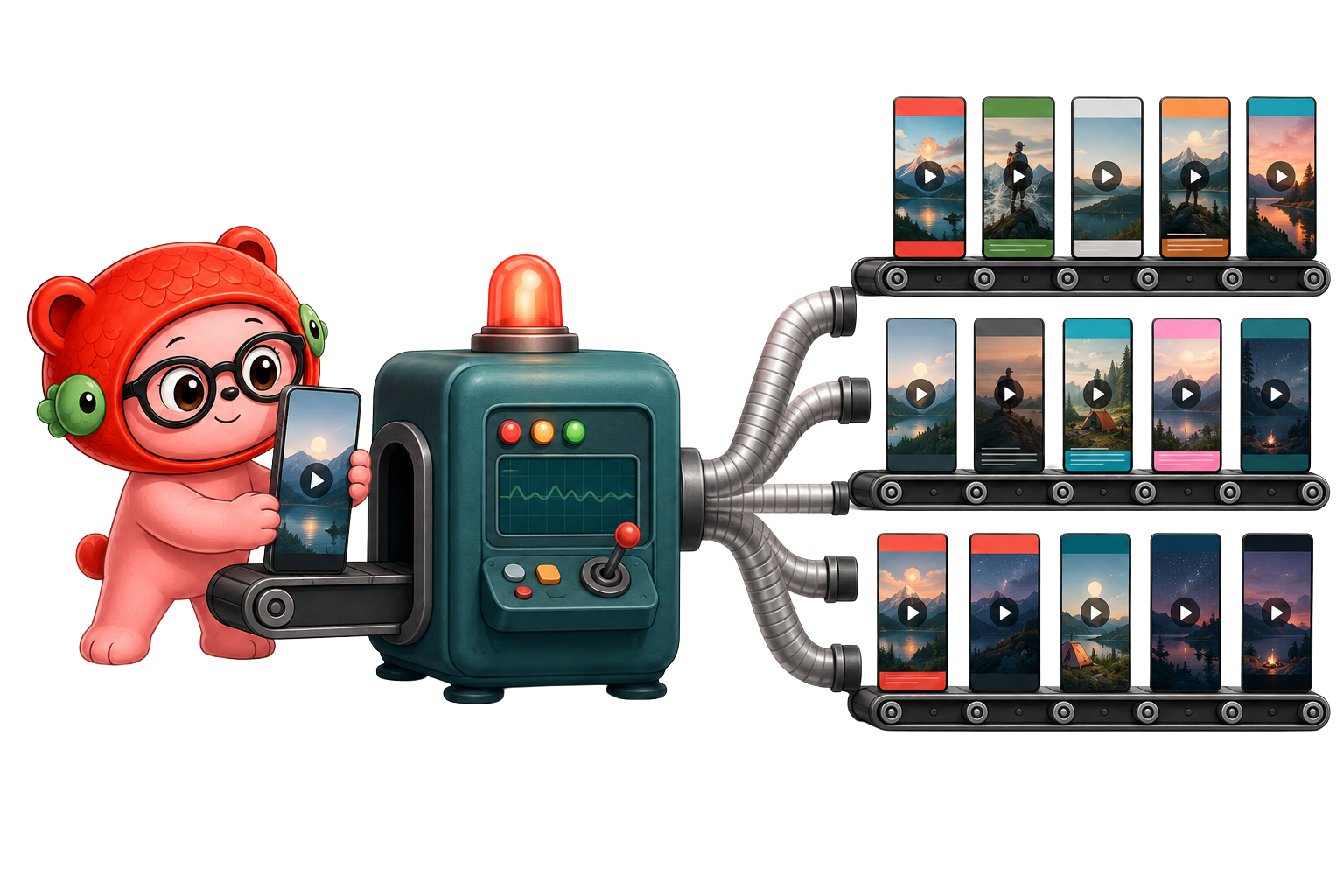
One source item becomes several versions
Large-scale distribution does not require creating every video from scratch.
One source item can be adapted for different accounts, platforms, and content hypotheses.
YOU CAN CHANGE
- Opening seconds
- Editing
- Clip order
- On-screen text
- Voiceover
- Music
- Cover
- Description
- CTA
- Length
- End screen
For viewers, the materials may explore one topic, while the system gets several variants to test.
How an Account Network Can Be Structured
Bot Farm architecture depends on the product, audience, and distribution objective.
Thematic network
Each account is dedicated to a separate topic, content pillar, or subcategory.
Example:
- finance;
- careers;
- technology;
- entrepreneurship;
- personal effectiveness.
All accounts direct audiences to one product or media hub.
Regional network
Accounts are distributed by city, region, country, or language segment.
Ideal for projects with local offers or a distributed audience.
Test network
Accounts are used to test different topics, angles, personalities, opening frames, and content hypotheses.
Effective formats are then scaled to main channels.
AI, a Team, or a Hybrid Production Model
Bot Farm does not mean that all content is generated automatically by AI. The production method is selected based on volume, budget, format, and quality requirements.
Automated content
Ideal for recurring, informational, template-based, and data-driven formats.
Hands-on production
Used where filming, expertise, complex editing, or an authorial approach is required.
Hybrid model
The team creates the foundation, while AI and automation help scale, adapt, and distribute materials.
When You Need Bot Farm
Rapid testing of content hypotheses
To test a large number of topics, angles, headlines, and opening frames.
Large-scale presence in short-form content
To publish content regularly across several platforms at once.
Media hub promotion
To direct attention to a main channel, website, app, or community.
Launching an information product
To quickly test topics and audiences before scaling promotion.
Working with a large archive
To turn interviews, webinars, live streams, and other materials into a series of short publications.
Supporting a project network
To centrally manage content across multiple accounts, brands, or business lines.
Bot Farm, AI Content Farm, and Content Factory Are Not the Same Thing
Process automation
AI Content Farm
Automates the regular creation, adaptation, approval, and publishing of one brand’s content according to predefined rules.
High-volume production
Content Factory
Produces a large volume of materials using a team, AI, filming, design, editing, and other methods.
Distribution scale
Bot Farm
Distributes content through an account network and directs audiences to a central hub.
Content Factory creates volume. AI Content Farm automates output. Bot Farm scales distribution.
What We Take Care Of
Core tasks
- Network structure design
- Development of account roles and themes
- Profile setup
- Content matrix
- Production workflows
- Content creation and adaptation
- Publishing plan
- Placement coordination
- Basic analytics collection
- Hypothesis testing
- Scaling effective formats
- Reporting preparation
Additional capabilities
- Filming
- Presenters
- Editing
- Voiceover
- Visual generation
- Scriptwriters
- Designers
- Advanced analytics
- CRM and dashboards
A Managed Network, Not Artificial Engagement
We build and manage an account network for producing and distributing content.
We do not use Bot Farm for:
- artificial likes and comments;
- fake reviews;
- impersonation;
- simulating real users;
- spreading knowingly false information;
- bypassing restrictions;
- hiding the owner of an advertised product;
- working with accounts without the owner’s consent.
We work with accounts that belong to the client or have been officially handed over for management.
Work and automation formats are designed with the requirements of selected platforms in mind.
What an Account Network Delivers
More audience touchpoints
Consistent presence across several platforms
Ability to test content quickly
Centralised publication management
Turning one source item into multiple versions
Collecting data on topics and formats
Directing attention to one central hub
Ability to scale effective workflows
Reach depends on content quality, topic, platforms, account condition, and audience response. The system increases the number of tests and touchpoints, but does not guarantee specific metrics.
Pricing depends on the scale of the network
Pricing is calculated after defining the number of accounts, platforms, content volume, and production approach.
Number of accounts
Number of platforms
Publication volume
Publishing frequency
Number of content workflows
Need for filming
Editing complexity
Depth of adaptation
Amount of manual work
Analytics level
Account support
START
For testing one hypothesis and launching a small account network.
SCALE
For regular publishing across several platforms and testing content combinations.
NETWORK
For large networks, high content volume, and multiple distribution workflows.
Bot Farm: Frequently Asked Questions
Bot Farm is a managed network of accounts that regularly distribute content and guide audiences to a central hub: a main channel, website, app, or another resource.
No. The service does not include artificial likes, comments, views, fake reviews, or imitation of real user actions. It is about producing and distributing content through a network of managed accounts.
One idea or source item can be used across several accounts, but the presentation is usually adapted: editing, opening frames, captions, covers, descriptions, length, and CTAs change.
The network can include TikTok, YouTube Shorts, VK Clips, RuTube Shorts, Reels, and other short-form platforms. The specific mix is determined by the objective, audience, and technical capabilities of the platforms.
To the brand’s main account, a Telegram channel, website, app, landing page, marketplace, product page, or another destination.
AI Content Farm automates content creation and publishing. Bot Farm handles distribution through an account network and increases the number of audience touchpoints.
Content Factory produces a large volume of materials. Bot Farm distributes that volume through an account network. The services can work together.
No. Depending on the task, the work may use AI, editors’ hands-on work, filming, editing, design, presenters, and archival materials.
Yes. You can connect the client’s existing accounts or develop the structure of a new network.
No. Reach depends on content quality, topic, platform, account history, and audience response. The system enables more tests and touchpoints, but does not guarantee specific metrics.
Workflows are designed around the available features and requirements of selected platforms. We do not offer bypassing restrictions, impersonation, or hidden artificial engagement.
Get in Touch
Our clients trust us to deliver real results.